
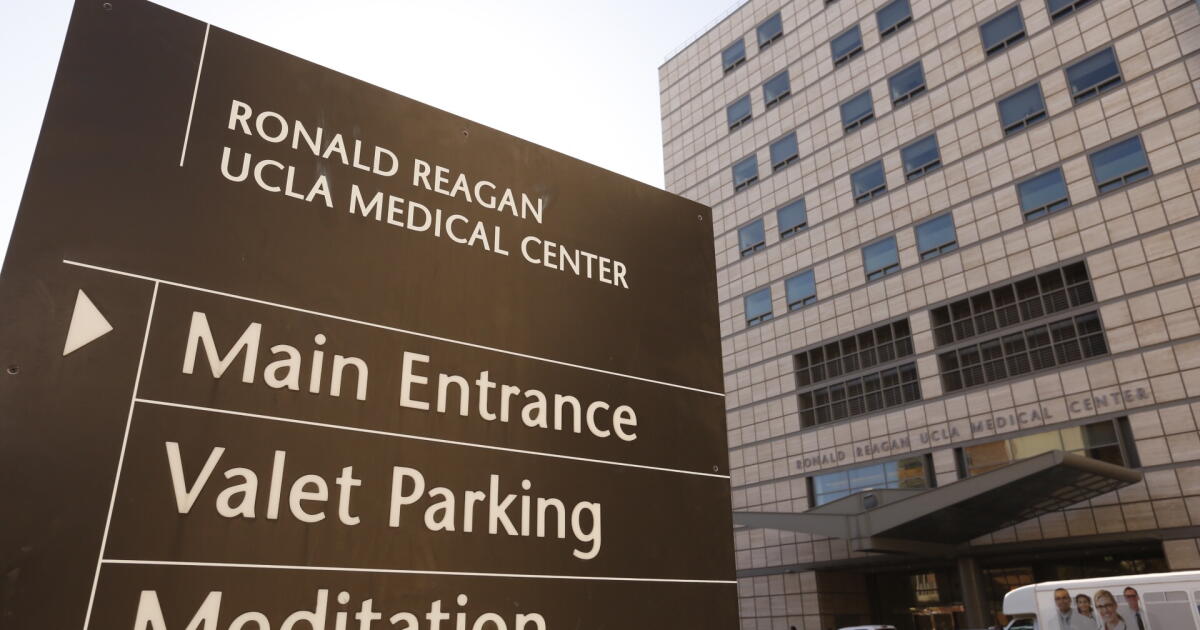
Thousands of low income patients in Los Angeles are facing a sudden crisis in their healthcare as a longstanding contract between UCLA Health and Health Care LA expired on June 30. The loss of this partnership leaves roughly 9,000 medically frail patients struggling to secure new doctors for critical needs, ranging from cancer treatment and infectious disease management to high risk maternity services and organ transplants. Many of these individuals had already waited months for specialist appointments only to be informed that they can no longer receive the essential care they require.
Tensions flared quickly following the expiration, leading Sabra Matovsky, the chief executive of Health Care LA, to claim that UCLA simply wanted the Medi Cal population out rather than negotiating better terms. She argued that while university officials cited capacity constraints at the Ronald Reagan UCLA Medical Center as a reason for ending the deal, those struggles should not be solved by displacing the poor while the system continues to expand into wealthy enclaves like Malibu and Montecito. This sentiment was echoed by some medical staff within the university, including Dr. Patrick Samones, who suggested that prioritizing growth over underserved residents felt like putting profits before patients.
In response to the backlash, a planned press conference meant to highlight patient suffering was abruptly canceled after both parties reached a tentative transition agreement. Under this new arrangement, patients with existing appointments or those requiring specific agreed upon services will continue to be treated at UCLA facilities over the next year to avoid immediate disruptions. However, university spokesperson Phil Hampton noted that accepting an unlimited stream of new referrals remains impossible due to current staffing and facility limitations.
The dispute highlights a larger tension regarding the role of public universities in regional safety nets. While critics point to data suggesting UCLA generates less revenue from Medi Cal compared to other UC health systems, Hampton defended the institution’s record. He stated that UCLA provides hundreds of millions of dollars in unreimbursed care annually and faces significant financial pressure because government reimbursement rates often fail to keep pace with the actual cost of complex medical treatment. For now, thousands of vulnerable Angelenos remain caught in the middle of a bureaucratic struggle over who bears the cost of life saving care.